PROJECTS
CASE STUDIES

ZAP-KOOPERACJA
SmartBox System
Warehouse system modernization.
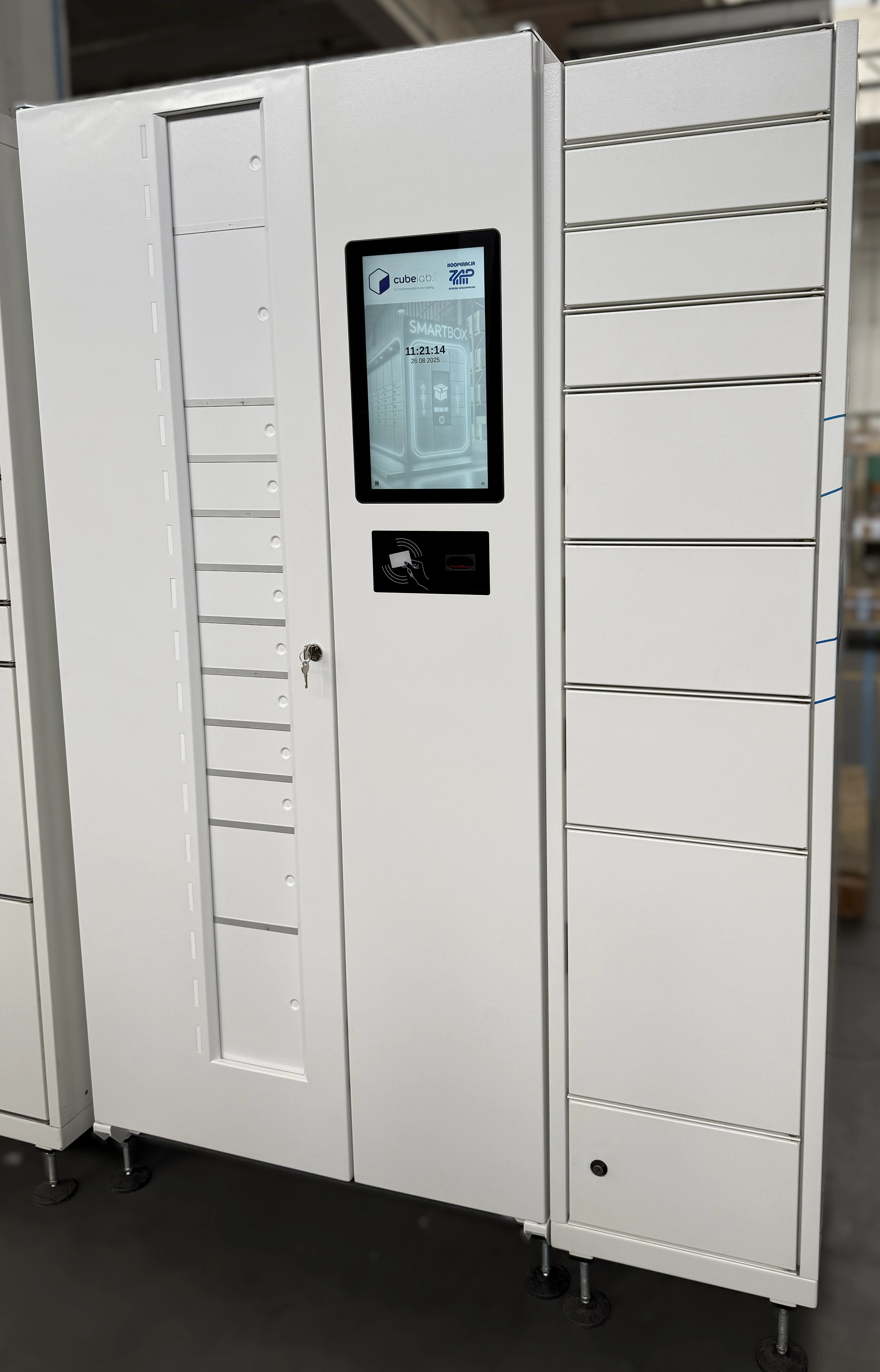
SmartBox is a modular warehouse dispensing machine used in production environments for controlled dispensing of components and tools. The device had a proven mechanical construction with a rotating drum and locker system. Our goal was its technological modernization and cost optimization.
The system required:
- reduction of production costs,
- increased reliability,
- organization of control architecture,
- creation of a new, developmental software layer.
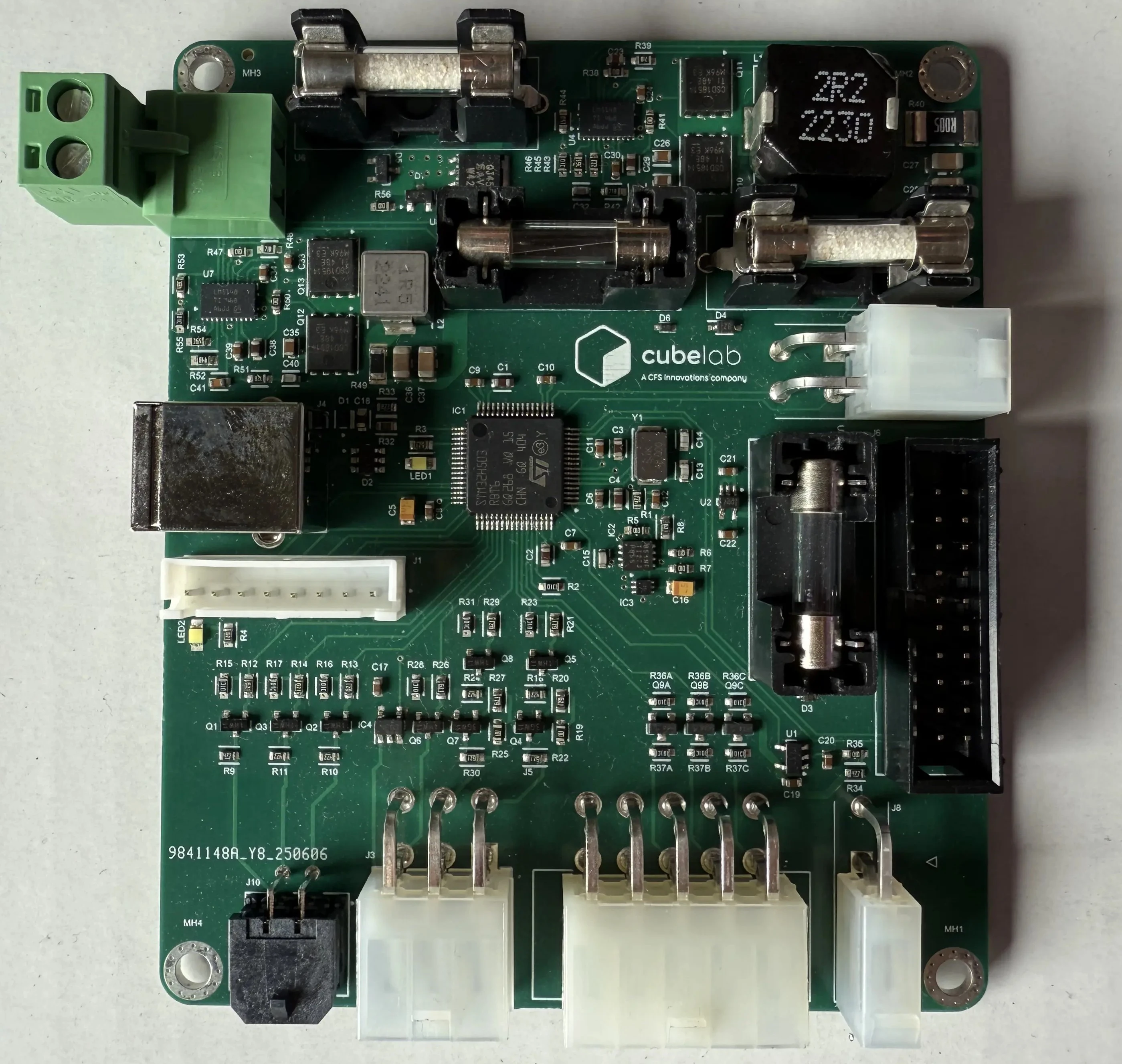
We designed new electronic circuits and dedicated PCB boards responsible for system control. A new generation of control modules was created, based on a simplified and more coherent communication architecture. This allowed to reduce the number of components, improve operational stability, and lower production costs. In parallel, we conducted research on selecting appropriate sensors for the lockers. We tested various solutions in terms of resistance to interference, durability, and measurement repeatability. The final selection ensured high reliability of closed state detection, which directly translated into safety and system stability. The system was also equipped with an optimized drum drive. Software
The modernization covered the full software layer of the system. We created:
- firmware for all control boards,
- machine computer software,
- server applications responsible for SMS and e-mail notifications,
- a website for system management, configuration, and reporting.

Result
SmartBox retained its proven mechanical construction, but gained modern electronics, new software, and optimized control architecture. The modernization allowed to reduce production costs, increase system reliability, simplify service and maintenance, create a solid foundation for further product development. This is an example of a project where conscious engineering optimization brought greater value than designing the device from scratch.
Thermonuclear fusion reactor
A particle accelerator capable of achieving deuterium fusion.

Thermonuclear fusion research is being conducted in many laboratories around the world. This process is crucial to maintaining the right operating conditions and temperatures. Intrigued, we decided to conduct research and create a reactor in our laboratory.
The project's goal was to build a fusion reactor. This is a particle accelerator capable of achieving deuterium fusion. The project's main goal was to obtain and publish as much data as possible related to this phenomenon, which could contribute to a deeper understanding of the technology for future research.
During the study, we examined the influence of various factors on the fusion process, including the electrostatic grid material and its geometry. The device's design was based on the Farnsworth-Hirsch fusor. The reactor was designed from scratch based on numerical calculations and FEA simulations.


Result
As a result of our project, we built a fully operational research reactor. We collected data on the deuterium fusion phenomenon, which will contribute to furthering our understanding of this topic. The reactor could be used as a neutron generator.


MAHLE Behr
Electromagnetic actuator
A device for testing the strength of car radiator connections.

Automotive heat exchangers operate in demanding environments and are often exposed to high vibrations. To replicate these conditions in the laboratory, it was necessary to create a suitable machine.
We designed an electromagnetic actuator whose primary purpose is to replicate real-world driving conditions to test the durability of automotive radiators. The actuator precisely generates an oscillating force acting on the flexible connections of the cooling system, allowing us to assess the strength of the materials used in its manufacture.
We began designing the actuator by reviewing scientific publications to select the optimal solution. We then performed a series of computer simulations that led to the development of the optimal solution from a structural and electronic perspective.

Result
As a result of our project work, we built a fully operational research reactor. We collected data on the deuterium fusion phenomenon, which will contribute to furthering our understanding of this topic. The reactor can be used as a neutron generator.
Mediam
Solid-state Tesla coil
A device that produces lightning and plays music.
A Tesla coil is a device capable of generating controlled electrical discharges that can also produce music. This phenomenon not only offers a fascinating spectacle but also has significant educational value, serving as a valuable tool for understanding the principles of physics.


For Mediam, we modernized a poorly designed Tesla coil. The requirements were strict: a minimum 3-meter discharge with the ability to play music. Thanks to our technical capabilities, this wasn't a major problem.
We developed an advanced electronic controller that controlled the operation of IGBT transistors in the resonant power circuit. Switched currents reached up to 2,500 A. Playing music using the discharges was possible thanks to specially developed audio files.

Result
The completed device fully met the client's requirements and is being used in demonstrations. By combining entertainment with educational elements, participants of such demonstrations can gain a deeper understanding of fundamental physical phenomena and become familiar with the historical significance of Nikola Tesla. Furthermore, Tesla coils find practical industrial applications for testing aircraft coatings.
Imperial College London - Diploma Thesis
Test stand for thermomagnetic generators
A machine for testing generators that recover energy from waste heat.

Thermomagnetic generators can use low-temperature water (waste from manufacturing processes) to recover thermal energy by powering a power generator. We have developed a test bench specifically for scientists that allows them to conduct generator tests.
We designed this machine to evaluate and demonstrate the performance of thermomagnetic generators. The test stand generates controlled laboratory conditions by actively heating and cooling thermomagnetic materials by supplying water at specific temperatures and flow rates.
Additionally, the test stand allows for measuring the temperature of the thermomagnetic material during operation, allowing for further evaluation of heat transfer between water and the thermomagnetic material. To evaluate the generator's performance, the platform measures the generated torque. As a versatile test stand, it can adapt to various generator topologies, shapes, sizes, and orientations. The LabVIEW program allows for control of all systems via a computer.


Result
Obtaining data related to the operation of thermomagnetic generators can lead to a better understanding of this technology and its potential applications, for example, energy recovery from hot and cold seawater. This data can be used for further research on improving the efficiency of the generators and their integration in various energy systems.
Imperial College London - Diploma Thesis
Research combustion engine with a transparent cylinder
Silnik pozwalający na obserwację płomienia w cylindrze.

The characteristics of the in-cylinder flow field and the quality of fuel combustion have a significant impact on the performance of an internal combustion engine. A literature review revealed that no studies have been conducted on optical engines at speeds exceeding 6,000 rpm. Flame speed is crucial, but has so far only been studied at low speeds.
The work focused on studying fuel combustion processes in an internal combustion engine. We designed and built an engine with a transparent cylinder, which enabled the flame to be observed using a high-speed camera. We implemented innovative technical solutions that had not been used before, enabling research at very high rotational speeds, reaching up to 10,000 rpm.

Result
The main result of this research is the establishment of a linear relationship between the flame velocity in the cylinder and the engine speed. This phenomenon is of great importance to engine designers, as previously, scientific knowledge of combustion processes at such high speeds was lacking.
Research into the combustion process in internal combustion engines can lead to improvements in their efficiency. This is particularly important in the context of environmental concerns and the development of new fuels, such as hydrogen and ammonia.
MAHLE Behr
Refrigerant quality sensor
A sensor that allows determining the degree of refrigerant consumption.

Refrigerant contamination leads to accelerated degradation and, in extreme cases, damage to system components. To prevent this, it is essential to detect contamination at an early stage.
To this end, we developed a Freon sensor concept based on the phenomenon of electrical capacitance. The sensor precisely detects changes in the electrical capacitance of the flowing medium, thus enabling it to report any observed anomalies. To design the sensor, we performed numerous multiphysics simulations, which allowed us to determine the optimal sensor geometry.


Result
We have built the first prototype of the sensor, which is currently undergoing testing. Once completed, the sensor will be installed in the refrigeration system of the testing machine, where it will inform engineers about contamination. The sensor technology will also be applicable to other working media, including multiphase ones.
